Send As SMS

Wednesday, November 30, 2005

God Bless the True Journalists (Andrew Heavens, VOA and Deutche Welle and this new Ferenji guy)

If the stupid 'cheetah' story has offened you as an Ethiopian (more covergae given to 2 cheetahs than Ethiopian lives lost to Fascist Meles Graziani), then this story from a Ferenji guy will remind you that there will be justice. Bravo to EthioMedia, EthiopianReview, Nazret.com, and of course MediaEthiopia (self-serving, huh?). All these guys are doing their best to make sure that the story of the Great Ethiopian Resistance to Fascism does not disappear from the headlines. The 2005 Ethiopian Revolution goes on!!!!!

-------begin-------------------------

The White Man Deserves to be Punished
I had been in Ethiopia for a month when I was arrested by soldiers for taking a photograph.

The majority of citizens here have been upset with the current political situation since last May, when disputed elections placed Prime Minister Meles Zenawi and his EPRDF party firmly in control of the Parliament. Riots in June led to 36 deaths and countless number of arrests.

Efforts by the main opposition party, the CUDP, have been mired in internal fighting and ineffective measures, leaving their supporters frustrated and restless.

Three weeks ago, civil unrest began once again in Addis Ababa and throughout the country. Several dozen people were killed and thousands arrested, including newspaper editors and opposition party leaders.

On the morning of Wednesday, November 1st, a local colleague of mine named Bilal and I went looking for clashes, and I brought my digital camera along. Rumors were flying that soldiers had already killed several people. As a novice journalist working for a regional African newspaper, I was eager to experience this excitement first hand and get the chance to report on it.

We made our way to Piazza, an area known for jewelry shops and one reported to have been host to several incidents between government soldiers and restless citizens. Not thirty seconds after turning a corner onto Adwa Road and entering the main area, we heard gunshots.

The driver of the taxi we had chartered panicked, turned the car around, and started speeding back in the direction from which we had come. Bilal and I had to yell ferociously at him before he finally pulled over long enough for us to jump out.

We began walking back towards the sound of gunfire, and asked a few bystanders where the fighting was and what they had seen. Most had seen little and were simply trying to get home. The main roads were abandoned and littered with rocks.

As we made our way farther along and entered the narrow dirt roads of the surrounding hills, the comments from onlookers became more lurid, and several had witnessed actual shootings. A group of women was crying over a boy who had been shot and killed where we were standing only moments before. The soldiers had apparently taken his body with them. We seemed to be just minutes behind every skirmish.

It was nearing midday, and I was sweating under the hot Ethiopian sun. Our transportation now gone, I wondered how long we would wander the back streets looking for trouble. I looked over at Bilal. He was wearing a thick wool sweater and seemed remarkably calm.

Just as I was becoming tired and discouraged, however, we heard gunshots again. They sounded frighteningly close. Most people on the streets immediately went inside and shut their doors behind them, peeking out through windows and slits in between corrugated tin walls. The soldiers were known to beat and arrest any suspicious young people seen loitering about, so few were taking chances.

I urged Bilal to stay on the streets with me, for I wanted at least one photograph of the protestors throwing rocks or soldiers arresting citizens. He was understandably hesitant, but agreed to continue searching as long as I promised to be smart. I promised.

A few minutes later, we saw a group of about twenty soldiers clad in blue camouflage beating a handful of young men with batons. Several were pointing rifles in the direction of more bystanders, but a wall obstructed my view. I took several quick pictures, hiding myself behind a shuttered fruit stand.

No shots were fired, and the soldiers moved deeper into the cluster of shanty houses. I was breathing hard and had a knot in my stomach, but I wanted to capture a better image of the fighting before returning to our offices.

I am not a photographer, and I have no experience documenting armed conflict. With my Western confidence and arrogance, however, I thought that I could get close to the action and be immune from the rocks, bullets, and the aggravated soldiers.

We caught up with the search party after a few minutes, and I took out my camera again. Bilal advised me not to take any more pictures, but I did not listen.

When I snapped the next photograph, a soldier saw me and started running in our direction. Not thinking clearly, my colleague and I started to run. We went down a narrow alleyway and hid inside a tiny house, which was already full of people. They laughed when they saw a white man rush into their small home, and I laughed with them. An old man was sitting on the ground washing a shirt in a bucket full of dirty water. He looked up at me with faint amusement, then went back to his task.

We heard shouts outside and moved onto the one, impossibly small bed in the house. The young woman of the home pulled down a sheet that was hanging to dry over us, hiding us from view.

The police were going door to door, forcing their way inside to look for the Westerner who had taken their photo. Despite efforts by the family to hide us, a soldier entered the room and pulled the sheet aside. I looked up at him with the most innocent-looking face I could muster, as if it was the most natural thing in the world for me to be hiding behind a sheet there. Unfortunately this did not work. He dragged us outside, where the soldiers began chanting, “We found him! We found him!”

* * *
There seemed to be scores of armed men around me now, yelling and gesturing violently. They were clearly excited that they had captured a white man, but seemed unsure what to do with me. As they began beating Bilal around the stomach and back, they simply surrounded me and pushed me a few times, forcing me to sit on the ground.

I had left my bag, with the camera inside, hidden in the house. When a senior looking soldier stuck his finger in my face and yelled at me where the camera was, I shrugged my shoulders and said, “What camera?” He was not pleased with this. He took off his sunglasses and yelled something in Amharic. They forced Bilal back into the house and he came out holding my bag a few seconds later, looking shaken.

It dawned on me then that the consequences of my stupidity and carelessness were going to be far more serious for Bilal than myself. I shouldn’t have forced him to stay out on the streets with me, beckoning needless danger. I shouldn’t have taken that last picture. I shouldn’t have tried to run.

When I told the soldiers to stop hitting my fellow reporter, they pushed me down and raised the butts of their rifles in a threat that was immediately understood. I shut up.

The senior officer held my camera out and yelled some more. I naively thought they were going to simply confiscate my camera and leave me there, so I asked how I could get my camera back.

“You do not ask questions!” the man shouted. “You have no authority now, you understand?” I nodded dumbly.

We were then loaded onto a truck and the seriousness of the situation hit me. The rifle of the soldier sitting next to me was digging into my hip, and when we stopped to pick up five more young men suspected of throwing stones, the small space on the back of the pick-up became even more cramped.

Despite the close quarters, Bilal managed to whisper to me that we should lie about being journalists. He was the experienced one, an Ethiopian, and I was the green American on his first real assignment, so I agreed.

We were to be students. I was doing research for my Masters in Sociology and my companion was helping me get acclimated to life in Addis Ababa. We hashed out the details of how we had met, etc. and were thus committed to the story. I knew that we would have to dispose of our media ID badges before they searched us, and fidgeted with my wallet.

An explosion went off near us while we were driving, causing all of the soldiers on the truck to leap off and rush in the direction of the blast, guns at the ready. More uniformed men appeared from side streets to investigate. There was some yelling and the sound of doors being kicked open, but apparently nothing substantial was discovered. Soldiers disappeared into the alleys as fast as they had come, and our truck lurched forward again.

We were driven through the streets slowly, and several bystanders saw me on the truck. I wondered what they thought, seeing a young white man in the middle of all that camouflage and weaponry. Perhaps they thought what I was thinking to myself at the time: ‘What a fool, a Westerner getting taken in by the police. He shouldn’t have been so reckless.’

We arrived at an old customs checkpoint station from the days of the Dergue regime of Colonel Mengsitu, a socialist that dominated and suffocated Ethiopian life through the 1980s. The compound was dirty and filled with what looked like old train cars, now used for offices and housing.

We were told to sit on the ground, in between two concrete buildings. They left us there for some time, never having searched us thoroughly, and both Bilal and I were able to hide our Press ID passes beneath one of the metal cars we were sitting near. We also disposed of a tape with several interviews with political leaders on it, and a notepad with the names and numbers of media contacts. It turned out to be fairly easy to discard these items without drawing attention. The soldiers were busy out on the streets looking for more suspects. They never even looked in my bag.

* * *
I thought that I would be treated like the rest of those who had been arrested that day, but the next time we were visited by an officer the distinction was made clear. All the Ethiopians were forced to take off their shoes and were led away, towards the back of the complex. I asked where they were being taken, fearing for Bilal’s safety.

The officer glared at me and said in surprisingly good English, “He is Ethiopian! You are American! You both should be aware of the difference.” I sat back down, helpless. I was not spoken to for the rest of the day.

When Bilal and the other young men returned to the area where I was sitting, their clothes were covered in dirt. Several were limping, and one man was bleeding from his foot. I made eye contact sheepishly with some of them, but I was not one of them anymore. They had clearly been subject to something I had been exempted from, and a division deeper than foreigner and local now existed.

I would later be told that the men had been forced to crawl on their hands and knees, roll around in the dirt on their stomachs and backs, and hop around the compound, all while being beaten on the back and legs. Occasionally a soldier would stop them and put his boot on their neck, threatening them with harsher beatings and alluding to the knife in his belt. They were told that this was their punishment.

Many of the soldiers would walk past me and glare, clearly not happy that I was being left alone. One, still wearing his helmet and shin guards, came toward me and yelled something in Amharic before being pulled away by comrades. Bilal translated his shouting. “The white man deserves to be punished! The white man deserves to be punished!”

From where I sat I could see into one of the housing units. Rows upon rows of cots stacked four and five high filled the dimly lit room. The lives of the soldiers, mostly recruited from rural areas outside Addis and poorly trained, were not easy it seemed. Even amidst the barrage of insults and with the memory of their preponderance for violence, my attitude towards them softened.

Night came and the temperature dropped dramatically. We huddled on the ground, trying to somehow keep warm. Soldiers were laughing and talking loudly in the cafeteria, and servants passed inside with heaping baskets of bread.

Eventually we were put in another truck and taken to a nearby police station. I was softly questioned and released after a Major confiscated my camera’s memory card. Bilal was to remain. He would most likely be kept overnight. As I was being led out of the station compound, I looked at him and was helpless once again. Bilal nodded, then told me the phone number of his brother and asked me to call him. When I reached the street, I wrote the number down on my hand before walking away.

The white foreigner who was to blame was released without a fuss, the innocent Ethiopian was going to get beaten again and probably taken some 400 km away to a remote jail.

* * *
I woke up the next morning dazed. The previous day’s events seemed unreal. I sat on the edge of my bed trying to remember everything.

My boss had picked me up later that night and somehow convinced the Major to release Bilal. A minor miracle, I was later told.

* * *
Now, everything seems normal. The blue and white mini-bus taxis are back on the smoke-filled streets. Fruit stands, shoeshine boys and child beggars once again dominate the sidewalk scenery, and at least a few newspapers are being distributed.

After a week and a half of streets empty save for heavily armed soldiers in blue camouflage, the city came back to life. The political turmoil has settled and the exasperated young people have stopped throwing rocks and torching city buses. Maybe they have resigned themselves to accepting the current situation, or perhaps too many have been arrested, too many killed.

Despite appearances, all is not right in Addis Ababa or Ethiopia.

Over 10,000 people were arrested and while many have been released, all the top officials of the political opposition party are still in custody, as are several editors and journalists from local newspapers. Most have not been charged with crimes, and their locations, as well as their release dates, are unknown.

When the production manager of the newspaper I work for was at the printing press two weeks ago, he saw several plain-clothes police officers commandeer 50,000 editions of another paper and arrest the men attempting to distribute it. As a result we were unable to go to print, as were all but two newspapers here (both of which have strong government connections).

The tepid international pressure has done nothing to dissuade Prime Minister Meles from keeping these people locked up. In fact, as recent comments to foreign media show, it has only strengthened his resolve to charge certain opposition members with treason.

Uneasiness still hangs in the air here. The high school boys who play ping-pong every afternoon have not returned to their space next to the soccer field, and the women who normally greet me cheerily as I return home from work now say nothing. Life goes on, but the frustration over the unsuccessful political transformation has left many bitterly disappointed and feeling hopeless.

This entry was posted on Wednesday, November 23rd

Sunday, November 27, 2005

Evict Meles from Commission for Africa - Exile him declares Herald Tribune


The international pressure on the Fascist Meles Graziani increases with New York Times and Herlad Tribune asking publicly that the dictator be expelled from international community.

Good governance gone bad
The New York Times
SUNDAY, NOVEMBER 27, 2005


Somebody needs to remind Meles Zenawi that he is supposed to be setting the example for how democracy should work in Africa. As things stand, the only example Meles, the Ethiopian prime minister, is setting is one of autocratic repression.

Meles has often been lauded as an exemplar of good government by the likes of the Prime Minister Tony Blair of Britain, who picked him to help draft his Commission for Africa report on how to reduce poverty and promote democracy on the continent. But it turns out that Meles is in favor of democracy only when people are voting for him.

During parliamentary elections in May, many voters in Ethiopia, particularly in Addis Ababa, cast ballots for lesser-known opposition party members instead of entrenched government officials. When the Meles government announced that it won 296 of Parliament's 547 seats, with the opposition taking 176, many critics charged voter fraud. To make matters worse, the ruling party then suddenly changed parliamentary rules so that only a party with 51 percent of the seats could raise an issue for discussion.

In June, rioters took to the streets of Addis Ababa. Government security forces responded by firing live rounds into crowds, killing 40 protesters. Earlier this month, another protest erupted. Government soldiers again fired live rounds on crowds of people. By the end of the clashes, some 46 more people were dead. Has Meles never heard of tear gas? Soldiers swept through the streets and arrested more than two dozen opposition party members and even a few journalists. The Committee to Protect Journalists, a New York group that promotes a free press, wrote Meles that it was "deeply troubled by your government's harassment and censorship of journalists."

Alemzurya Teshoe, 25, the daughter of one opposition leader, told The New York Times that police raided her home to take away her father and fatally shot her mother, who was screaming in protest. Teshoe said neighbors who went to recover her mother's body were told that they had to sign a document saying that the opposition party was responsible for the killing. "I was there when they killed my mother," she said of the request, which was later dropped. "I saw it with my own eyes."

Left with egg on its face, the British government is withholding some of Ethiopia's foreign aid money. But that would actually hurt the poorest of the poor, at no cost to Meles. Western donors should funnel money to ground-level aid projects, while shunning direct budgetary support of the government. Blair should publicly evict Meles from his Commission for Africa. The rest of the international development crowd should exile him.

That is the problem with good press: Eventually you have to live up to your image.

Now, that is America at its finest-Just one ordinary voice

Forum: Oops, we did it again(?)
November 27, 2005
Washington Times

When Adolf Hitler raised his beleaguered country to a new level of economic stability, we praised him and ignored his ideologies. When Josef Stalin threw in his lot with the Allied Forces, we called him Uncle Joe and handed many countries and millions of lives over to him. When we were distraught by another country holding our citizens hostage, we welcomed Saddam Hussein, who fought our oppressor, Iran.
When we sought to protect Afghanistan from being taken over by a totalitarian regime, we were encouraged that Osama bin Laden was willing to fight beside us, and we offered training and weapons to him and his troops.
Times change. We see our mistakes. Can we avoid making the same ones in the future?
Meles Zenawi, the leader of Ethiopia, has received $21 billion from the United States since taking power in 1991 under the guise of leading his country toward democracy. Ethiopia had its first democratic election ever last May. When it became clear the presiding government had suffered an overwhelming loss to its opposition, the CUD (Coalition for Unity and Democracy), ballot counting stopped, the government proclaimed itself the winner, opposition was quelled with death or imprisonment. At present, thousands have been imprisoned for the unforgivable crime of wanting democracy.
Can we learn from our past mistakes so Ethiopia doesn't become another "Oops, we did it again"?
Could it be our fear of the enemy clouds our judgment? Could it be we invest more in war than in the long-range quest for peace? Are we creating new enemies unintentionally, by supporting anyone, no matter how unscrupulous, willing to fight on or side or promise not to aid our enemy, when they are laughing at us and doing exactly as they please, investing billions in Swiss banks while their people starve?
If we truly believe in democracy and freedom for the world, why do we not support efforts to educate and uplift all others to achieve the same blessings that we have, including freedom from fear and freedom of speech, religion and assembly.
Why don't we invest in peace as aggressively as we are in war through education and true diplomacy, not only promoting what benefits us now and our financial future?
America was founded on the idea individuals were capable of self-rule. It has not been a smooth road, as we strove to ensure self-evident rights to all citizens. Can we believe the people of Ethiopia can build and maintain a democratic government? This is a country whose rich culture goes back to the time of ancient Egypt, which embraced Judaism from King David and Christianity from Jesus' disciple, Phillip; which protected Mohammed from his enemies and is therefore protected in the Koran. Ethiopia also is the one country in all Africa never colonized by a foreign power.
Can we try to remember what it was like for our ancestors who were willing to give up everything for a dream? I still believe in that dream: a government of the people, by the people, for the people. I cast in my lot with the people of Ethiopia.

RHONDA WILLIAMS
Not a doctor, not a lawyer; just someone's mom

Saturday, November 19, 2005

Is Meles Graziani using HIV/AIDS as a weapon to terrorize Ethiopians?

The following anonymous letter that appeared in Ethiomedia brings up the question that many have suspected for long that the Fascist Meles may be trying to punish the Ethiopian youth of the 2005 revolution with HIV/AIDS infection. In Ethiopia, it is common to shave the heads of those arrested; but where HIV/AIDS is prevalent at 12.6% in urban areas, why would these Fascist thugs shave as many as hundreds of young men and women with a single blade.

_____________________________________begin________________________
Dear Sir:

Let me give you the snapshot on HIV prevalence in the country. According to the Ministry of Health report (mind you it is a government report which seems to underestimate the magnitude of the epidemic for political reasons): " The estimated national adult prevalence in 2003 is 4.4%, of which 12.6% are urban and 2.6% rural." (AIDS in Ethiopia fifth report by MoH, June 2004). According to the above conservative report of the government, at least one in ten adults is HIV positive in urban areas. Having said this, let me come back to explain the worst of all crimes in Ethiopia history.


Punishing Detainees with HIV Virus!
There were protests in June and November 2005, which claimed the lives of many people. I don't want to play with figures but I want to show you the scale of the problem and the hidden genocide. By the way it very soon that we will have many mass graves after the dictator is removed from power.

In the June protest at least 5000 people were detained. In November the number of detainees skyrocketed to over 10,000 up to 50,000. In both cases the security forces were shaving 30 to 40 detainees' head with one razor blade. In both protests almost all of the detainees were taken from Addis Ababa where the HIV prevalence is 12%. You can imagine there is one HIV-carrier or someone living with the virus. Thus at least 15,000 to 20,000 could be exposed to the deadly virus deliberately. The crime was conducted this way: In both protests there were also "pseudo detainees," those undercover who spy on the genuine political detainees, if they were planning an escape or any other stuff. These false detainees had their own razor blades. That means it is a well-planned and deliberate act to infect others. This is not only the planned atrocity by the government there were also more than 3000 women detainees, this group was exposed for sexual violence. They have started to release the prisoners without charging them.

However, they have warned the detainees against the consequences of telling prison conditions to the public or media. They have taken the detainees' full address, and if anyone tries to tell to the media or international community, punishment by death is what they had vowed.

From this worst scenario I am trying to make a point that the impact of this inhuman act unleashed by the ruthless tyrants should be taken as equally as the Rwanda genocide. The only difference in our case is, it was well planned and designed ahead of time to make all acts acceptable and legitimate. From these detainees some of them have families (wife and husband) plus imagine the sexual network they had and they will have; that makes me worry. When you take into consideration the trickledown effect of these atrocities made by irresponsible group of halogens could affect at list 140,000 people (the average household size in Ethiopia is 7). So how can one keep silent in the face of such crimes against humanity?

Please inform human rights groups and international organizations around the world. It is a crime against humanity that all human beings should know.

God Bless

Anonymous

Friday, November 18, 2005

The view from NGOs - Meles Graziani had killed seven young kids around Piazza who were fleeing for their lives

Two things I wanted to talk about today. One is the media, especially the media from fellow dictatorial countries. The other one is this heart-wrenching message that I saw on the net that I decided to post here.

First what bothers me most these days is what these Chinese government media write (or not write) about Ethiopia. While the rest of the world condemned the massacre of the almost 200 Ethiopian youth by their own government, the Chinese kept on writing articles like "Meles talks about progress and trade", "The situation in Ethiopia is improving", etc. Just garbage. The Chinese should realize that if they need respect in Africa and around the world, they will have to stop being selfish and grow up to their responsibility. While Darfur is burning, they salivate for Sudanese oil. While Ethiopia is burning, they talk about a non-existing normaliztion of events and the threat of treason on our opposition leaders. Sure, they are freaking communists when it comes down to it; but they should realize that if they want to keep on selling see $2 shoes to Ethiopia and Africa, they better respect us and stop writing garbage that supports bllod thirsty dictators like the butcher of Addis Ababa - Meles Graziani.

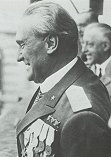
So much for the Chinese. (Below are shown Marshall Rudolfo Graziani and Meles Grazinai - both butchers of Addis Ababa)


The other thing that has bothered me was this article I saw on the Internt posted by NGO worker in Ethiopia. Her description of how Meles Graziani's soldiers were chasing 9 and 10 year old boys and girls in our own Piazza only to shoot them in daylight and throw their bodies on the streets brought tears of sadnness and complete devstation that I have not experienced since the dark days of the other monster Mengistu. Sure will any of the world media like BBC talk about this? No, the same thing was done by the other Fascist Barbarian Marshall Graziani of Fasicst Italy in its brief 5 year occupation of our beloved city. Did the BBC say anything about it? No, I doubt it. People will tell you how they were hiding and protecting themselves on that massacre day by the older Graziani (Meles Graziani's cosuin) in Armenian and Greek churches in Piazza. This time, however, almost 60 years from that time, our 7 baby brothers and sisters were shot in beloved Piazza. Was there anyone to protect them? How could Addis Ababa forget this? We will not forget. We will remember who was with us and who helped us.

God bless VOA! God Bless Deutche Welle!
Screw BBC, Screw Xinhua!

For a parallel between the Sene Lideta and Hidar Massacre in Ethiopia by Meles Grazinai and Marshall Rudolpho Graziani, please look at what the eminent Ethiopianist Professor Richard Pankhurst wrote a few years ago: http://www.geocities.com/Eureka/Park/5875/News_Graziani_Jun19.html

-------------------begin-----------------------------------
I work with one of the largest NGOs working with vulnerable children in Ethiopia. I have been deeply troubled and traumatized by recent events in Ethiopia. I have witnessed ruthless killings of minors as young as ten years old.

When stone throwing youths, most of them unemployed angry young men with no political motives other than their own grievances, expressed their frustrations in protests, the armed militia responded by firing live ammunitions indiscriminately into crowds. I have seen with my own eyes when security forces killed and injured at least seven young kids around Piazza who were fleeing for their lives. Eyewitness accounts have confirmed that security forces brutally shot defenseless protesters even in areas where there were no protests. Though the government media reported that the number of people killed in was 42 local residents estimate over 200, which needs to be independently verified.

Some of those killed were street kids whose bodies have been disposed by government troops. The inhuman treatment of innocent people was so widespread that the troops rounded young men from their homes en mass. So far the police have said that they have released nearly 9000 people who were not involved in the riots from harsh concentration camps. The fact that all those people were detained without due process of law shows the extent to which the government is violating basic human rights.

Returnees from the detention centres are claiming that they were held against their wills in appalling conditions and some were apparently tortured. There is also a report that the detainees were shaved off with shared razor blades exposing them to infectious diseases such as HIV/AIDS. Beatings and degrading treatment is reportedly rampant in the concentration camps. Detainees are also said to be given a roll of bread a day.

It is estimated that over 10,000 detainees have still been held against their will and without due process of law in degrading and inhuman conditions including in Didesa, a remote military camp, were the weather is harsh and yellow fever is widespread.

I call upon the international community including the International Red Cross, Amnesty International, Human Rights Watch, Save the Children and Unicef to investigate the gross human rights violations and crimes against humanities being perpetrated by the government troops and security forces. I urge the partners of the Ethiopian government especially the European Union, the United States and the United Kingdom to take a firm stand against the authorities who have been killing, torturing, and jailing their critics. I also call upon the Prime Minister of Ethiopia, Mr. Meles Zenawi, to stop behaving ruthlessly and inhumanely against unarmed civilians. May I remind the His Excellency that there is time for expiry of military power and the likelihood of facing justice.

The government of Ethiopia should be held to account to any appalling crimes it is committing against its own vulnerable poor people including the unemployed, orphans, street children and women.

Act now urgently.

Tania Martinet
Relief Worke

_____________end___________________

Wednesday, November 16, 2005

World Bank tells Meles Graziani that "We are in an unsustainable situation"

World Bank urges Ethiopia to act on crisis

By Anthony Mitchell

Addis Ababa - Ethiopia will lose international aid because of concerns about how the country is being governed, a World Bank official said on Wednesday, calling on leaders to quickly resolve a crisis triggered by a violent election dispute.

"Aid will be cut. The question is by how much?" Isaac Diwan, World Bank country director in Ethiopia, said in an interview.

"We have sent very clear signals that international and World Bank assistance will be cut over time if the governance situation does not improve," Diwan said.

The World Bank provides $450-million of the $1.2-billion development assistance that Ethiopia receives from donors.

Political unrest claimed the lives of at least 46 people early this month. Another 42 died in June in similar protests over a May 15 election. The protests began after the main opposition parties accused authorities of rigging the polls that returned the ruling party to power.

Thousands of people were detained in the subsequent crackdown. Among those seized were leaders of the main opposition group, members of local civil society organisations and editors of newspapers.

Some are expected to face treason charges for their alleged part in orchestrating the violence, Prime Minister Meles Zenawi told foreign news organisations last week. Authorities said Wednesday they have now freed more than 8 954 detainees who were found not to be directly involved in the violence.

"We are in an unsustainable situation. We have to come to a resolution. We are at the heart of the crisis right now," Diwan said.

Donors are worried that Ethiopia's economic problems could feed the political crisis.

Rising global oil prices have tripled Ethiopia's oil bill, from $300-million two years ago to the current $900-million, Diwan said.

The government has been subsidising local oil prices since December 2004, leaving the nation with less money to spend on health care, education and other programs to alleviate poverty in the country where average annual incomes are a meagre $100.

Half of children are physically stunted because of malnutrition.

"The economic fragility could exacerbate the current political crisis," Diwan said. "The risk is that social expenditure will be cut which will hurt the poor."

In addition to development aid, Ethiopia receives $700-million in emergency aid, mainly for victims of frequent droughts and food shortages in this nation of an estimated 70-million people. - Sapa-AP


Published on the Web by IOL on 2005-11-16 05:59:19


--------------------------------------------------------------------------------
© Independent Online 2005. All rights reserved. IOL publishes this article in good faith but is not liable for any loss or damage caused by reliance on the information it contains.

Monday, November 14, 2005

New York Times offers a fatal blow to Fascist Meles Graziani's Credibility

Ethiopia's Capital, Once Promising, Finds Itself in Crisis
By MARC LACEY
ADDIS ABABA, Ethiopia - This city fancies itself the capital of Africa, the crossroads of the continent, a refined refuge where African leaders gather to address the crises in unruly places like Sudan, Ivory Coast and Congo.

The city's most powerful resident, Prime Minister Meles Zenawi, has been deemed one of Africa's new generation of leaders, a rebel turned democrat and darling of the international donors.

But after a months-long political standoff that has turned increasingly bloody, Ethiopia's capital has joined Africa's more ignominious places, becoming the latest continental crisis point to attract the attention of the African Union, which has its headquarters here. Mr. Meles now finds himself criticized as a dictator, not a democrat.

"If the situation deteriorates here, it's a major symbolic failure for the African Union," said Abdul Mohammed, an analyst with the Inter-African Group who huddled with African Union leaders on Nov. 4 to discuss the Ethiopia crisis. "This is the home of the A.U. This is occurring in the A.U.'s backyard."

Quite literally. The African Union's crisis management team did not have to consult a map to find the latest hot spot on this continent. It could look out the window.

Ethiopian security forces fired on stone-throwing protesters in the streets around the African Union's headquarters in early November. Tires were burned in the street. The lot next door to the organization was turned into a makeshift detention center as thousands of opposition supporters were rounded up by the government.

Many have been released, but treason charges have been filed against some, and others are being held in rugged conditions outside the capital.

The discord stems from a democratic transition that has stumbled and fallen flat. The government called parliamentary elections in May and, unlike in the last two elections in 1995 and 2000, actually allowed opposition candidates a chance to campaign.

The election was considered a test of the fledging democracy in Africa's second most populous country. The results were a shock.

The opposition swept seats in Addis Ababa and finished strongly in other urban areas. Little-known candidates managed to oust several powerful government ministers, a sign that many voters had lost confidence in the governing party.

"The beauty of democracy is people have started to tell even the ruling party they can vote it out if it does not address its concerns," said Bereket Simon, a top aide to Mr. Meles, putting the best possible face on the surprise election results.

After weeks of controversy over those results, the government announced that it had won 296 seats in the 547-member Parliament, with the opposition taking 176 seats, far fewer than the opposition believed it was due.

Unused to sharing power, the ruling party also hastily changed parliamentary rules so that only a party with 51 percent of the seats could raise an issue for discussion, infuriating the opposition.

When opposition supporters took to the streets in June to claim vote-rigging by the government, security forces opened fire, killing about 40 of them.

The African Union stayed silent, drawing the wrath of opposition supporters who accused it of cozying up to the Ethiopian political elite and acting like the old, ineffective Organization of African Unity, which rarely criticized member governments, no matter how repressive.

Ethiopia's political crisis blew up again on Nov. 1 while the African Union held a summit meeting here. Opposition supporters organized a low-key protest to attract the attention of the visiting African leaders: motorists were told to toot their horns from 8 to 8:30 a.m. for three days in a row.

But heavily armed soldiers were on the streets. Tensions were high and clashes broke out. Soon, soldiers were firing on demonstrators, who were heaving rocks, smashing vehicles and burning tires in the road.

The African Union condemned the violence this time and asked Mr. Meles to explain how so many people - 40 or more in the latest bout of violence - died. The chairman, former President Alpha Oumar Konaré of Mali, has met repeatedly with Mr. Meles to discuss the crisis.

Mr. Meles blames the opposition for the violence, accusing it even of hurling grenades at security forces. Infuriated by the protests against his rule, Mr. Meles has accused the opposition of trying to topple the government through demonstrations, which he says he will not allow.

To control the dissent, soldiers and police officers have swept through the city, arresting the top leadership of the main opposition group, the Coalition of Unity and Development. Similar sweeps have resulted in young men being taken away from neighborhoods where trouble has broken out.

"What we have detained is people who have tried to overthrow the duly constituted government, and that in my view is treason under the laws of the country," Mr. Meles has told the BBC .

Print journalists are also under siege. At least two reporters viewed as sympathetic to the opposition have been detained. Other journalists have gone into hiding, and the authorities took into custody two journalists' mothers as a pressure tactic.

[The Committee to Protect Journalists, a New York group that promotes a free press, has told Mr. Meles in a letter that it is "deeply troubled by your government's harassment and censorship of journalists."]

Alemzurya Teshoe, 25, the daughter of one opposition leader, said that the police raided her home to take away her father and then fatally shot her mother, who was screaming in protest. Ms. Teshoe said the police also shot at one of her brothers, but missed and hit a neighbor instead.

Distraught as she recounted the incident, Ms. Teshoe said neighbors who went to the hospital to recover her mother's body were told that they had to sign a document saying that the opposition party was responsible for the killing. "I was there when they killed my mother," she said, outraged by the request, which was later dropped. "I saw it with my own eyes."

The opposition has said it will not join the Parliament until the government agrees to investigate the killings, release political prisoners and include the opposition on the electoral commission, among other demands. Boycotts of ruling party businesses are also planned. [A strike by shopkeepers and taxi drivers planned for the week of Nov. 7 did not succeed after the government threatened to take away the licenses of those who did not report to work.]

"This was daylight robbery," Hailu Shawel, a prominent businessman who is president of the opposition coalition, said in a recent interview, before his arrest. "The whole machinery of the government went to war to overturn these results."

Despite little tradition of compromise - the word itself does not exist in Amharic, Ethiopians say - negotiation is widely regarded as the only way out of the standoff.

"Africa is littered with the negative consequences of not compromising," said Mr. Mohammed, an Ethiopian political analyst who has been trying to bring the parties together. "The African elite sees compromise as a sign of weakness. It is not. A multiethnic state like this cannot be governed anymore by a one-party state."

What makes Ethiopia's turmoil all the more surprising is that Mr. Meles has been heralded by the West as one of Africa's promising new leaders. He stayed in the good graces of the United States and the European Union, the biggest donors to Ethiopia, even after he and his rival, President Isaias Afewerki of Eritrea, waged a border war from 1998 to 2000 that resulted in a death toll as high as 100,000. Tensions remain high between the countries, with many diplomats fearing that Mr. Isaias may take advantage of Mr. Meles's domestic woes to take aggressive action at the border.

Prime Minister Tony Blair of Britain picked Mr. Meles, known for his cerebral nature, as a member of his Commission for Africa to help draft a blueprint for building wealth and democracy on the continent. Even after the June killings, Mr. Meles was invited to the Group of 8 meeting in Scotland to advise world leaders.

But with the recent bout of violence, Mr. Meles's image abroad has begun to take a battering.

"Another bloodbath is taking place in Ethiopia," Ana Gomes, the European Union's chief election observer in the May polling, said in a recent letter urging colleagues on the European Parliament to end their chummy approach toward Mr. Meles.

Tuesday, November 08, 2005

How badly IMF is out of touch with today's events - Ethiopia

Look at what the IMF people posted today and you will get an idea how these fat cats have outdone themselves in demonstarting that they have no clue of what they are talking about.

"....This said, the team stressed the need to complement the on-going expansion of infrastructure with reforms to foster private sector development, including the financial sector. In the fiscal area, reforms should focus on actions to boost revenue collections and to strengthen public expenditure management"

Is Ethiopia's problem 'revenue collections'? Please do not insult us. When you people come to Addis Ababa, do you go to Merkato, Lideta, Meshuwalekiya? Do you talk to the likes of the 8-12 year olds who were fighting against automatic weapon wielding soldiers equipped by the money that you sent? Do you talk to the growing class of the downtroden and hopless who have resorted to protest? Or you just spend your time talking to ignorant ex-communist cadres of Meles like Teferra Walwa and Kassu Illala?

Please have a sense and address the real problems of poverty in the city, lack of governance, corruption that sucks as much as 90% of the money that you bring. Look who is benefitting. Fouteen years and $15 billion later, Ethiopians are poorer than ever. Meles and TPLF cadres are richer with money stolen from the country and deposited elsewhere. Where is your mechanism for identifying where the money went? If indeed the money was spent in the country, why is Addis Ababa failing? Why is Ethiopia failing? Why are the people on the street facing live bullets to seek a better life while you are talking about 'revenue collection' problems?

Don't you think this statement of yours was untimely and with poor taste?

---------------------------------
Statement by IMF Staff Mission to Ethiopia

Nov. 8 2005

Press Release - International Monetary Fund

An International Monetary Fund (IMF) staff mission led by David Andrews, Assistant Director in the African Department, issued the following statement on October 25, 2005 in Addis Ababa:

"An IMF staff team visited Addis Ababa between October 11-24 to conduct the regular Article IV consultation discussions with the Ethiopian government. The discussions focused on the short-term economic outlook and policies, and the challenges associated with achieving substantive poverty reduction through reaching the Millennium Development Goals (MDGs) by 2015. The mission also met with representatives of civil society, the business community and Ethiopia's international partners.

"The IMF team welcomed the government's continued commitment to maintaining macroeconomic stability, which they consider to be key for achieving high and sustained rates of growth. In this regard, the government expressed concerns that the recent surge of world oil prices had led to a widening of external current account. The IMF team supported the authorities' view that the envisaged increase in public spending for productive infrastructure was important for accelerating growth. However, this spending could put further pressures on the balance of payments unless additional foreign financing was identified. Similarly, the large volume of public outlays could lead to an acceleration of prices. The team was encouraged by the government's assurances that measures would be taken as needed to counterbalance such pressures.

"The IMF team concurred with the government's view that increased external support was required to achieve the MDGs. This said, the team stressed the need to complement the on-going expansion of infrastructure with reforms to foster private sector development, including the financial sector. In the fiscal area, reforms should focus on actions to boost revenue collections and to strengthen public expenditure management.

"The IMF's Executive Board is expected to discuss the staff's report on this mission in late 2005 or early 2006. With the consent of the government, the report could be published on the IMF's website."

The Brave Hana Gobeze (a.k.a Ana Gomes)


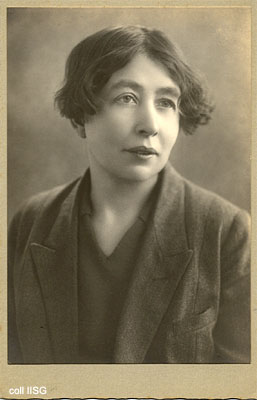
In Ethiopia's long history, we have always been fortunate to have had 'Friends of Ethiopia' around the world step up to the plate and defend our rights against foreign invaders as well as some of our own Fascist leaders like Meles Zenawi. The Pankhurst family (Sylvia Pankhurst, Richard Pankhurst, Alula and his siblings), the unforgettable Plowden and Yohannes Bell (close advisors to Emperor Theodros) and Alfred Ilg and now Ana Gomes are some of these outstanding people who will always have a special place in the hearts and minds of Ethiopians.


The latest of such friends of Ethiopia is the brave Ana Gomes of the European Union who is now affectionately called by her Ethiopianized name "Hanna Gobeze". In recognition of her unwavering standing for the right of Ethiopians just like the other brave woman of the 19th and 20th century, Sylvia Pankhurst, we re-print Ana Gomes' profile.

The Honorable Ana Gomes
- Vice-Chairwoman, Subcommittee on Security and Defence
- Member, Committee on Foreign Affairs Delegation to the ACP-EU Joint Parliamentary Assembly
- Substitute Committee on Development, Committee on Women's Rights and Gender Equality, Delegation for relations with the United States, Delegation for relations with the NATO Parliamentary Assembly


Curriculum vitae
Graduate in law (University of Lisbon, 1979); diploma in Community law (INA, 1981);
diploma from the 'Institut International des Droits de l'Homme' (Strasbourg, 1989).

Diplomatic adviser to the Portuguese President (1982-1986); posted to the Permanent Mission to the UN and International Organisations, Geneva (1986-1989) and to the Embassies in Tokyo (1989-1991) and London (1991-1994);

Member of the Portuguese delegation to the Middle East peace process during Portugal's EU presidency (1992); member of the Special Political Affairs Office (East Timor dossier Timor) of the Foreign Ministry (1994-1995); head of office of the Secretary for European Affairs (1995-1996); member of Portugal's Permanent Mission to the UN in New York - coordination of the Portuguese delegation to the Security Council (1997-1998); head of Section of Interests and, later, Ambassador of Portugal to Jakarta (1999-2003).

Member of the National Executive and Political Executive of the PS (Socialist Party) (since 2002); member of the PS National Secretariat and Secretary for International Relations (2003-2004).

Member of the Portuguese branch of Amnesty International.


VIVA Hanna Gobeze!!
VIVA the Honorable Ana Gomes!!!!

Friday, November 04, 2005

Four people were killed and 11 were wounded in Bahar Dar. More than 100 martyr's blood on TPLF/Meles hand

12:17 p.m. November 4, 2005

ADDIS ABABA, Ethiopia – Violent protests of disputed elections spread Friday from the capital to other parts of Ethiopia, leaving four people dead, and the prime minister vowed to prosecute opposition officials after a week of bloody clashes, state media reported.
Police have killed at least 40 people since the confrontations began Tuesday in the capital, following largely peaceful protests Monday, medical officials said. The medical workers asked not to be identified for fear of retaliation. Government officials put the number of dead this week at 24 civilians and seven police officers.


Protests erupted Friday in Dessie, Gondar, Bahar Dar, Arba Minch, Awassa, Dire Dawa – towns that are mainly pro-opposition north and south of the capital, according to Western diplomats, hotel owners and tour operators.

Four people were killed and 11 were wounded in Bahar Dar, Ethiopia's second main city, state TV reported, although it was not immediately possible to verify the figures. Scattered gunfire and rioting was also reported in the capital, where doctors said at least two people were wounded.

The protesters were calling for an independent investigation into the killings in the capital and the release of political prisoners, according to witnesses.

The violence erupted over protests of May 15 parliamentary elections seen as a test of Prime Minister Zenawi Meles' commitment to reform.

The vote gave Meles' Ethiopian Peoples Revolutionary Democratic Front control of nearly two-thirds of parliament. Opposition parties say the election and vote count were marred by fraud, intimidation and violence, and they accused the ruling party of rigging the elections.

Meles told the state media that the main opposition Coalition for Unity and Democracy was responsible for the violence during the protests. Opposition officials would be charged in court, he said.

Protesters in Bahar Dar – a tourist site northwest of Addis Ababa – stopped a bus carrying 20 European tourists, including Spaniards, and tried to set it on fire using cans filled with gasoline. Police fired in the air to disperse the rioters and the bus drove off, said Dario Morello of Greenland Tours.

"The tourists were terrified. The situation is not good," he said.

Diplomats from four European countries told The Associated Press on Friday they had reports from opposition members and other contacts of police rounding up suspected opposition supporters overnight.

An estimated 3,000 people had been detained, according to the diplomats, who spoke on condition of anonymity because they wanted to avoid jeopardizing relations with the government. However, each acknowledged that it was not possible to get an exact figure.

The government later said it had brought the violence under control, adding that Addis Ababa "has become totally peaceful."

"On the other hand, similar but very limited violence trend happened Bahar Dar, Awassa, Gondar, Dessie and Dire Dawa," the government said. "However, these were brought under control after a short while."

Ambassadors from 21 countries that donate large sums of money to Ethiopia issued a statement expressing concern at the violence, calling for an urgent investigation and recommending all political detainees be either charged or released.

European Union chief election observer Ana Gomes sent an urgent appeal to EU governments and the Commission to act to end the "bloodbath."

"Stop the killing of Ethiopians who dare to believe that democracy is possible in Ethiopia," she said in the letter obtained by the AP.

"Most ironic is that Europe counts in Ethiopia, a country which depends on European aid, the largest recipient in Africa. Europe could definitely make the difference for democracy in Ethiopia," Gomes said. "Instead, current European leaders are choosing to fail it. In doing so, they are not just failing Ethiopians. They are also failing Europe."

Ethiopian special forces armed with heavy machine guns and sniper rifles patrolled Addis Ababa in Humvees and armored personnel carriers. Opposition supporters went from shop to shop, ordering merchants to close. Taxis were off the streets, and diplomats reported gunfire near the British and Vatican embassies. Protesters threw stones at buses near the Canadian Embassy in another part of the city, witnesses said.

Amid the protests, a New York-based media watchdog said authorities have threatened to arrest journalists and made statements that could endanger independent reporters. The government also appears to be using state media to smear foreign and independent media.

Uprising Spreads to Dessie, BahrDar Gondar -Liberal Democrat British MPs call Meles "an extremely unsuitable member of Tony Blair's Africa Commission"

Call to cut aid over Ethiopia unrest
Correspondents in London and Addis Ababa
November 05, 2005


BRITAIN'S generous support to the Ethiopian Government drew criticism yesterday as police continued to suppress opposition demonstrations and fears mounted of a new war along its border with Eritrea.

The Tories and the Liberal Democrats said Prime Minister Tony Blair should reconsider Britain's annual pound stg. 30 million ($71.8million) "no strings attached" budget support for President Meles Zenawi's regime.

The call followed the fourth consecutive day of violence in Addis Ababa, in which police shot dead at least 10 people.

That brought the death toll in the Ethiopian capital to about 50 civilians.

Adam Melaku, head of the Ethiopian Human Rights Council, said police were rounding up rights activists and members of the opposition Coalition for Unity and Democracy.

"We are very scared," he said.

The unrest coincided with warnings from the UN about the threat of a new war along the Ethiopian-Eritrean border, which both sides have recently reinforced with troops, armour and air defence missiles.

They fought two inconclusive battles in 1998 and 2000, which cost thousands of lives and millions of dollars.

Western diplomats are concerned that Mr Meles may be tempted to become more bellicose to divert attention from his domestic problems.

The behaviour of his Government has become a deep embarrassment for Mr Blair.

This year he championed Mr Meles, a former Marxist rebel, as one of the "new breed" of African leaders worthy of much greater Western support.

Mr Meles was appointed to Mr Blair's Commission for Africa, which promotes aid to countries that practise good governance.

"In view of the importance that was attached to good governance at (this year's) Gleneagles summit, it would be inconsistent if Britain were to go on making substantial payments direct to this Government when unacceptable behaviour is still going on," said Menzies Campbell, the Liberal Democrats' spokesman on foreign affairs. "The last thing we want is to find ourselves subsidising aggression."

Andrew Mitchell, the Conservative spokesman for International Development, also questioned British aid.

"I am deeply disturbed by the recent violence in Addis and the reports of growing tension on the Ethiopia-Eritrea border," he said. "As long ago as June I pointed out that Meles Zenawi was an extremely unsuitable member of Tony Blair's Africa Commission, due to his questionable human rights record.

"Britain gave Ethiopia pound stg. 73million in aid in 2003-04, of which pound stg. 45 million was paid direct to the Ethiopian Treasury."

In June, Britain suspended a pound stg. 20 million increase in aid after 36 students were shot dead in Addis Ababa, and Lord Triesman, Britain's Minister for Africa, has expressed his "concern and alarm" at the recent events there.

"The use of lethal means, by security forces or by demonstrators, can play no part in a true democracy," he said.

The US, meanwhile, expressed deep concern yesterday over the rising tension along the Ethiopian-Eritrean border, with the Bush administration urging the east African nations' governments to resolve differences through the UN. The US State Department was in contact with both governments.

Thursday, November 03, 2005

TPLF/Meles has now the blood of at least 82 martyrs on his hand


Ethiopian death toll mounts amid election protests
Last Updated Thu, 03 Nov 2005 08:58:12 EST
CBC News
Two more people are dead in Ethiopia, reportedly from police gunfire, in the fourth day of protests over the African country's disputed elections.

Thursday's deaths come a day after police shot and killed at least 23 people and injured at least 150 others, said doctors. Government officials maintain Wednesday's death toll stands at 11 civilians and one police officer.

The demonstrations centre around elections in May that resulted in Prime Minister Zenawi Meles' Ethiopian Peoples Revolutionary Democratic Front taking nearly two-third of the seats in parliament. Opposition parties accuse the governing party of rigging those elections and say fraud, intimidation and violence were rampant.

Police shot Thursday's victims in a wealthy neighbourhood of the capital Addis Ababa, where many foreign expatriates live, said doctors at the Black Lion and Zewditu hospitals. Witnesses also reported hearing gunfire near the French and Dutch embassies.

The protests began Monday with a peaceful demonstration by cab drivers who honked their horns in a show support for the opposition. Police arrested 30 drivers. This may have sparked the protests that have deteriorated into clashes between protesters and police.

Why are Chinese Online News Services Quiet on the Massacre?


I say 'Screw the Chinese". These guys were among the first to congratulate Meles on his rigged election victory. Now that more than 30 of our brothers and sisters have died, these Communists are quite. They write only to talk about some stupid stuff Meles does like 'irrigation in Tigray increased by 20%' or something. Ethiopians should always remember their true friends. Based on their actions, the Chinese are not our friends. Screw them and their cheap shoes.

Addis Ababa will Rise!

Wednesday, November 02, 2005

Some More Pictures of the Uprising of 2005


We want the world to know that the uoprising in Ethiopia is that of the people; not just opposition leaders. The people want change and chance to improve their lives with leaders they want. The whole of Addis Ababa, the young and the old are saying enough to Meles' ethnic division and exploitation of the country by few of his people. Look at the face of these people. Do they look like the eilite? It is the poor people of Ethiopia who want a decent life. All we have seen so far is Meles and his friends getting fatter, all the aid money coming and improving no one's life but the dictators. Is this what the 14 years under Meles and his Western Friends could have to show for? The people are patient; but when they reach boiling point, heaven help us!!!!

Meles' Fascist Massacre Continues - 40+5+23 dead so far.


23 killed in Ethiopia clashes

Wednesday, November 2, 2005 Posted: 1443 GMT (2243 HKT)


ADDIS ABABA, Ethiopia (Reuters) -- Twenty-three people including several women were killed in the Ethiopian capital on Wednesday, hospital sources said, when police opened fire at stone-throwing youths in the worst anti-government protests in months.

Security forces fired teargas and shot in the air to scatter hundreds of demonstrators who formed makeshift barricades, hurled rocks and smashed windscreens in central Addis Ababa in protest against a May poll the opposition says was rigged.

Special forces backed by four armored personnel carriers deployed in the volatile Mercato area, where violence erupted on Tuesday, and sealed it off from the rest of the city.

The sources, contacted at five hospitals across Addis Ababa, said the dead included women and young people.

The violence, the second straight day of unrest in the capital, brings to 31 the number killed in the past two days.

A Reuters reporter saw police round up dozens of people and bundle them into two pickup trucks.

"We are protesting because the government stole the election. People are angry because the police are very cruel," said Ghebremichael Ayele, dragging pieces of wood to block a road leading to the capital's biggest hospital.

Six protesters and two policemen died in Tuesday's violence, which began three days after the Coalition for Democracy and Unity (CUD) opposition group called for fresh protests.

In the hours after Tuesday's clashes security forces arrested the CUD leadership, saying it orchestrated the violence, widely seen as evidence of persistent political tensions in sub-Saharan Africa's second most populous nation.

Political troubles in Africa's top coffee grower have worsened since Ethiopia's second real multi-party vote handed Prime Minister Meles Zenawi a third five-year term in power, despite a massive swing to the opposition.

In June post-election clashes killed 36 people in Addis Ababa, an opposition stronghold, in the capital's worst violence since bloody but short-lived student riots in 2001.

Foreign observers broadly endorsed the official results, but noted some irregularities in the election.

Once feted by Western leaders as part of a "new generation" of African leaders pursuing pluralism and clean government, Meles' democratic credentials have come under growing scrutiny over the election wrangling and his crackdown on civil unrest.

Meles has repeatedly accused the opposition of plotting to incite violence and topple his government. He says he will not accept any threat to security in the country of 77 million.

Merera Gudina, first vice-chairman of a smaller opposition party, the United Ethiopian Democratic Forces (UEDF), criticized the government's strong-arm tactics.

"The government used excessive force," he told Reuters. "We are sitting on a time bomb. It exploded yesterday. It could explode again a week later or a month later."

At the hospital, a relative of one of the dead, Dawit Tesfaye, said: "The problem we have is that he (Meles) wants to stay in power by force. That's why they are killing my family."

Information Minister Berhanu Hailu played down the violence.

"The violent situation is continuing in some parts of the city, but it's not a big challenge to the government," he told reporters, blaming the CUD for instigating Tuesday's clashes.

CUD officials were not immediately available for comment.

The political deadlock in Ethiopia prompted the European Parliament to warn last month of possible cuts in development aid to the donor-dependent country unless there was an end to the "persecution and intimidation" of opposition groups.

Tuesday, November 01, 2005

Meles Kills 5 more on Nov 1, 05


Five killed in clashes in Ethiopian capital

Tuesday, November 1, 2005 Posted: 1350 GMT (2150 HKT)

ADDIS ABABA, Ethiopia (AP) -- Riot police clashed with dozens of opposition supporters in Ethiopia's capital Tuesday, shooting dead at least five people and wounding some 28 others in renewed protests against the disputed May 15 elections, health workers said.

Most of the dead were shot in the chest, and the wounded suffered gunshot wounds on their arms and legs, said doctors at the Black Lion Hospital who did not want to be identified because of fears of retribution.

An Associated Press reporter saw Red Cross ambulances bring in five victims, including a woman who was shot in the face and a man shot in the back. Some of the wounded later died in the hospital. Security forces kicked journalists out of the facilities before they could talk to the victims.

The wounded were treated in several hospitals.

The clashes occurred a day after police arrested and revoked the licenses of 30 taxi drivers who took part in renewed protests against the disputed polls. Protests against alleged electoral fraud in June saw police kill at least 42 people.

Bukara Debele, a 22-year-old tailor, said police fired indiscriminately at people on the streets, including those who were not involved in the protests.

"I was trying to get to work this morning, but the road was blocked by riot police. I could see there was beginning to be trouble, so I turned around to go home, but everyone started running and the police started shooting and I was shot in my leg," he said from a hospital bed.

"They were shooting at anyone. People were falling over and screaming, and the riot police were hitting" them with batons.

Information Minister Berhan Hailu blamed the violence on the main opposition party, adding that he had no details on casualties.

"The CUD has called for these demonstrations," Berhan said, referring to the Coalition for Unity and Democracy. "It is part of their plan to disrupt the peace and stability in the country. The incident today is a continuation of their previous disruption."

Opposition spokesman Gizachew Shiferaw urged supporters to stay calm and accused police of using excessive force.

"To blame us for this violence is madness. The trouble was incited by the government simply because people were supporting us by hooting their car horns; the measures that the police took ... were excessive," Gizachew said.

The riots began on the day the government threatened legal action against the CUD.

The party has been boycotting Ethiopia's lower house of parliament, saying it wants a resolution of questions about the results of the May parliamentary election before taking up its seats.

The party has 109 seats in the 547-member Council of People's Representatives. Opposition parties have claimed that hundreds of their supporters and members have been arrested in the past two months.

"Taking the CUD to court for its stance against the constitution is timely," the government said in a statement.

Riots subsided later Tuesday after hundreds of riot police reinforcements were deployed on streets strewn with broken glass and smoking tires.

But Western diplomats said gunfire erupted again in another part of Addis Ababa on Tuesday afternoon.